Physiotherapy has become a core part of modern healthcare, not just a supportive service. It plays a major role in helping patients recover from injuries, surgeries, and chronic conditions without relying heavily on medication or invasive procedures.
Career opportunities for physiotherapists in healthcare are expanding rapidly due to increasing health awareness, lifestyle disorders, and the need for long-term rehabilitation care. Today, physiotherapists are involved in every stage of patient recovery — from initial assessment to full rehabilitation.
This growth makes physiotherapy one of the most promising healthcare careers for students who want a stable, meaningful, and skill-based profession.
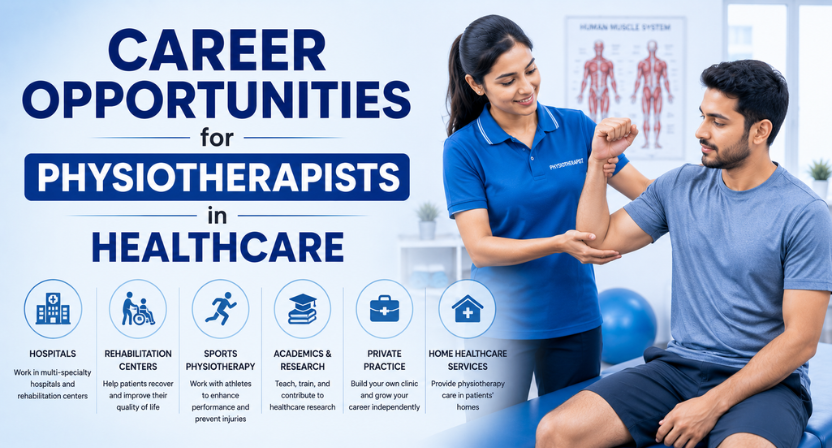
Career opportunities for physiotherapists are diverse and no longer limited to hospital settings. The profession has evolved into multiple specialised and non-traditional roles within healthcare.
Physiotherapists can build careers in clinical, non-clinical, and hybrid roles depending on their interests and skills. Some professionals prefer direct patient care, while others move into research, teaching, or corporate wellness.
This flexibility allows physiotherapy graduates to explore different career paths instead of being restricted to a single role throughout their career.
Physiotherapists play a critical role in improving patient outcomes and overall quality of life. Their work focuses on restoring movement, reducing pain, and preventing future injuries.
Unlike many healthcare roles that depend on medication, physiotherapy focuses on movement-based healing and functional recovery. This makes it a preferred choice for patients looking for long-term solutions.
Physiotherapists work closely with doctors, surgeons, and other healthcare professionals to ensure patients receive complete care. In many cases, they are responsible for monitoring progress and adjusting treatment plans based on patient response.
Increasing Lifestyle Disorders
Modern lifestyles have led to a sharp rise in conditions like back pain, neck strain, obesity, and joint problems. These conditions require ongoing physiotherapy treatment rather than short-term solutions.
Growing Demand for Non-Surgical Treatment
Patients today prefer non-invasive treatments that reduce dependency on medicines. Physiotherapy offers safe and effective alternatives, increasing its demand across all age groups.
Ageing Population
As the population ages, the need for mobility support and rehabilitation increases. Elderly patients often require continuous physiotherapy to maintain independence.
Expansion of the Sports and Fitness Industry
With more people engaging in sports and fitness activities, injuries are becoming more common. This has increased the demand for sports physiotherapists.
Technological Advancements
Digital healthcare, wearable devices, and AI-based rehabilitation tools are creating new career opportunities and changing how physiotherapy is delivered.
1. Hospital-Based Physiotherapist
Hospitals are the foundation of most physiotherapy careers. They provide structured environments where physiotherapists gain exposure to a wide range of cases.
In hospitals, physiotherapists work with patients recovering from surgeries such as joint replacements, fractures, and spinal procedures. They also assist in neurological rehabilitation for conditions like stroke and paralysis.
Working in a hospital helps build strong clinical skills because you deal with different types of patients every day. It also improves your ability to work in a team with doctors and nurses.
Sports physiotherapy focuses on injury prevention, performance enhancement, and recovery for athletes.
Physiotherapists in this field work closely with athletes to ensure they maintain peak physical condition. They design exercise programs, monitor performance, and help athletes recover quickly after injuries.
This career requires specialised knowledge and continuous learning, but it offers exciting opportunities, especially for those passionate about sports and fitness.
Rehabilitation physiotherapists work with patients who need long-term care and recovery support.
Patients may include those recovering from strokes, spinal injuries, or major accidents. The goal is to help them regain independence and improve their daily functioning.
This role requires patience, strong planning skills, and the ability to motivate patients through long recovery periods.
Home care physiotherapy is becoming increasingly popular, especially among elderly patients and those recovering from surgery.
Physiotherapists visit patients at home and provide personalised treatment plans. This helps patients recover in a comfortable environment and reduces the need for frequent hospital visits.
This career offers flexibility and often allows physiotherapists to build stronger relationships with patients.
Many physiotherapists choose to open their own clinics after gaining experience.
Running a clinic allows you to work independently and build your own patient base. It also offers higher income potential compared to salaried roles.
However, success in private practice depends on your clinical skills, communication, and ability to build trust with patients.
Physiotherapists who are interested in education can pursue teaching roles.
They can work as lecturers in physiotherapy colleges, guide students during clinical training, and contribute to academic research.
This career path requires advanced qualifications but offers stability and intellectual growth.
7. Research and Innovation in Physiotherapy
Research is an emerging field in physiotherapy.
Physiotherapists contribute to developing new treatment techniques, improving rehabilitation methods, and studying patient outcomes.
This field is ideal for those interested in innovation and advancing healthcare practices.
Corporate organisations are increasingly investing in employee health.
Physiotherapists help improve workplace ergonomics, reduce injury risks, and promote physical well-being among employees.
This is a growing non-clinical career option with good work-life balance.
Specialisation helps physiotherapists build expertise and stand out in a competitive job market.
For example, an orthopedic physiotherapist focuses on bone and joint issues, while a neurological physiotherapist works with brain and nerve-related conditions.
Choosing a specialisation allows you to develop advanced skills and increases your chances of higher-paying roles.
As highlighted in your previous guide , skills are the most important factor in career success.
Clinical skills like patient assessment and manual therapy are essential for treatment. Communication skills help build trust and ensure patients follow treatment plans correctly.
Technical skills such as equipment handling and documentation are equally important in modern healthcare settings. Professional skills like problem-solving and adaptability help physiotherapists handle real-world challenges effectively.
Physiotherapy offers steady and reliable career growth.
Fresh graduates may start with moderate salaries, but income increases with experience and specialisation. Physiotherapists who build strong reputations or start their own clinics can earn significantly higher incomes.
Career growth in physiotherapy is directly linked to your skills and patient outcomes.
The future of physiotherapy is evolving with technology.
Tele-rehabilitation allows physiotherapists to treat patients remotely. Wearable devices help track recovery progress. AI tools assist in movement analysis and treatment planning.
Physiotherapists who adapt to these changes will have better career opportunities and stay ahead in the industry.
Physiotherapy can be physically demanding, as it involves long hours of standing and assisting patients.
It can also be emotionally challenging, especially when dealing with patients who have slow recovery or chronic conditions.
However, these challenges are balanced by the satisfaction of helping patients improve their quality of life.
To succeed in physiotherapy, focus on practical learning and real-world experience.
Take internships seriously and actively participate in clinical postings. Improve your communication skills and stay updated with new techniques.
Choosing the right specialisation and continuously improving your skills will help you build a successful and long-lasting career.
Little Flower Institutions focus on practical, skill-based education.
Students receive early clinical exposure, hands-on training, and real hospital experience. This approach helps students develop confidence and become industry-ready professionals.
Career opportunities for physiotherapists in healthcare are vast, diverse, and continuously growing. The field offers multiple career paths, from hospitals and sports to research and entrepreneurship.
Physiotherapy is a career that combines science, skill, and compassion. It offers not only job stability but also the opportunity to make a real difference in people’s lives.
After BPT, you can work in hospitals, rehabilitation centres, sports clinics, home healthcare services, or corporate wellness programs. You can also choose teaching, research, or start your own physiotherapy clinic.
Yes, physiotherapy is a fast-growing healthcare career in India with increasing demand due to lifestyle disorders, sports injuries, and ageing population. It offers stable job opportunities and long-term career growth.
Medical imaging and specializeOrthopedic, sports, and neurological physiotherapy are among the most in-demand specialisations. The best field depends on your interest, skills, and long-term career goals.d technical roles usually offer higher pay.
Yes, physiotherapists can start their own clinic after gaining experience and proper licensing. Private practice offers independence, higher income potential, and the opportunity to build a personal brand.
Freshers typically earn between ₹15,000 and ₹30,000 per month. With experience and specialisation, salaries can increase significantly, and private practitioners can earn much more depending on patient volume.
Key skills include patient assessment, manual therapy, rehabilitation planning, communication, and problem-solving. Strong clinical and practical skills are essential for long-term success.