Introduction – The Rising Demand for Physiotherapists in India
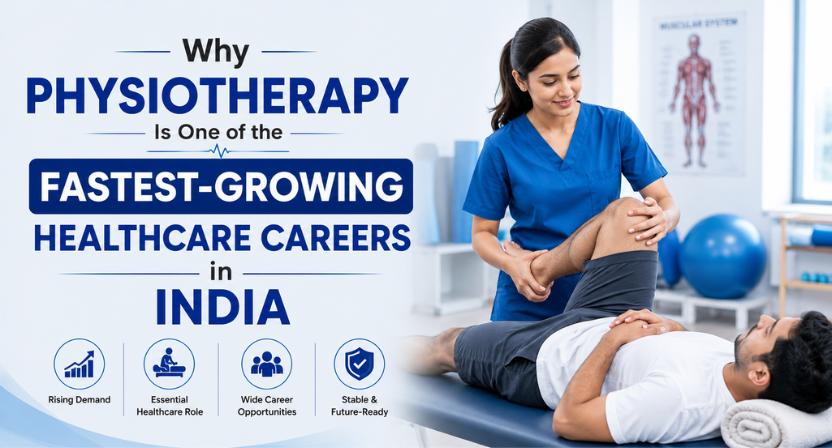
Physiotherapy has become one of India’s fastest-growing healthcare careers, driven by a major shift towards rehabilitation, mobility care, and long-term wellness. With an ageing population, rising lifestyle disorders like back pain and arthritis, increasing road-traffic accidents, and a sharp rise in sports and fitness-related injuries, the need for skilled physiotherapists has never been higher.
Hospitals, sports centres, specialty clinics, and home-care services are constantly hiring trained physiotherapy professionals—making it a high-demand career for students after 12th PCB who want a medical profession without NEET. As India’s healthcare system expands its focus on recovery and quality of life, physiotherapists are becoming essential members of every care team.
At Little Flower Institutions, Bangalore, students receive Indian Association of Physiotherapy (IAP) and RGUHS-affiliated BPT training, modern lab support, and strong hospital tie-ups, ensuring real-time clinical exposure and job-ready skills from day one—exactly what today’s healthcare industry demands.
A physiotherapist helps patients reduce pain, improve mobility, and recover faster from injuries, illnesses, and surgeries. They use non-invasive, exercise-based, and movement-focused treatments to restore strength, flexibility, and function—without medicines or surgeries.
Physiotherapists play a key role in managing conditions such as:
Difference at a glance:
As modern healthcare shifts towards long-term rehabilitation, preventive care, and functional recovery, physiotherapists have become indispensable in hospitals, clinics, ICUs, sports centres, and home-care settings—making BPT one of the most future-proof medical careers today.
Physiotherapy is no longer limited to hospitals—its demand now spans sports, fitness, rehabilitation, home-care, corporate wellness, and global healthcare systems. For students who want a medical career without NEET and with strong growth potential, BPT offers unmatched advantages.
1. Huge Patient Demand Across India
Back pain, arthritis, post-COVID weakness, sports injuries, and lifestyle disorders have made physiotherapists essential in every hospital and clinic.
2. Work Directly With Doctors, Surgeons & Athletes
Physiotherapists collaborate with orthopaedic surgeons, neurologists, cardiologists, and sports teams—making the role dynamic and highly respected.
3. Strong Global Demand (UK, Canada, Australia, GCC)
Countries facing healthcare manpower shortages are actively hiring BPT graduates, offering faster migration pathways and higher salaries.
4. High Job Satisfaction & Deep Patient Impact
Physiotherapists help patients walk again, recover mobility, and return to normal life—creating a rewarding and meaningful career.
5. Diverse Specialisation Opportunities
Students can specialise in:
6. Recession-Proof & Future-Proof Career
Healthcare is one industry that never slows down—ensuring long-term stability and consistent opportunities for physiotherapists.
India’s demand for physiotherapists is expected to double by 2030, driven by major healthcare and lifestyle shifts.
• Rise in Lifestyle Diseases
Sedentary work culture → chronic back pain, neck pain, obesity, and joint disorders
Physiotherapists are now the first line of treatment for these conditions.
• India’s Ageing Population
With more senior citizens needing mobility and pain-management support, long-term physiotherapy demand is rising sharply.
• Growth of Post-Surgery Rehabilitation
Knee replacements, spine surgeries, cardiac surgeries → all require months of physiotherapy for full recovery.
• Sports & Fitness Boom
Gyms, sports academies, leagues, and athletic programs need full-time physiotherapists for injury prevention and performance enhancement.
• AI-Supported Physiotherapy Devices
AI-based posture correction, robotic rehab devices, and remote physiotherapy programs are creating new career pathways.
• Massive Under-Supply of Qualified Physiotherapists
India currently needs 3× more physiotherapists than available—making BPT one of the safest, high-opportunity careers today.
The Bachelor of Physiotherapy (BPT) is a 4-year professional medical program that trains students to diagnose, treat, and rehabilitate patients using physical techniques rather than medicines or surgery.
Course Duration
What Students Learn in BPT
The BPT curriculum builds a strong foundation in:
Clinical Exposure
Throughout the program, students rotate across:
Importance of Internship
The 6-month internship allows students to:
Little Flower Institutions ensures full-time clinical postings through tie-ups with top hospitals—helping students become job-ready even before graduation.
Eligibility Criteria
To apply for BPT at Little Flower Institutions, students must have:
The BSc AOTT syllabus is designed to train students in anaesthesia techniques, surgical support, OT workflow, and ICU-level patient monitoring. Here is the year-wise breakdown:
Is NEET Required for BPT?
No.
Most physiotherapy colleges—including Little Flower—do not require NEET, making BPT an excellent medical career alternative without competitive exam pressure.
Admission Process at Little Flower Institutions
Little Flower Institutions maintains a high-quality yet affordable fee structure, making it one of the best value-for-money BPT colleges in Bangalore.
The BPT syllabus is designed to build knowledge year by year, leading to clinical mastery by the internship phase.
The final 6-month internship exposes students to real patient cases under supervision—giving them the confidence to start independent clinical practice.
Physiotherapy is a skill-based profession, and your success depends heavily on practical exposure, not just classroom learning. Little Flower Institutions ensures students train in real clinical environments from early semesters through its strong network of hospital tie-ups.
What Students Practically Learn During BPT
Students are posted in multi-speciality hospitals to handle real patient cases.
Learn patient assessment, mobility testing, documentation, and treatment planning.
Hands-on training in:
Support patients after:
Students rotate across:
With hospital tie-ups across Bangalore, Little Flower Institutions guarantees:
This ensures students graduate with confidence, competence, and job readiness—a strong competitive edge in the physiotherapy field.
Physiotherapy is one of the few healthcare careers where graduates can work immediately after an internship. Demand spans across hospitals, clinics, sports, fitness, and home care.
Top Career Roles After BPT
✔ Physiotherapist (Hospitals & Clinics)
Treat ortho, neuro, cardio, and rehab cases.
✔ Sports Physiotherapist
Work with gyms, sports academies, fitness centres, and personal athletes.
✔ Rehabilitation Therapist
Support patients recovering from injuries, paralysis, surgeries, or disabilities.
✔ ICU, Cardio-Respiratory Physiotherapist
Work in ICUs, cardiac units, and pulmonary rehab departments.
✔ Neuro Physiotherapist
Treat stroke, spinal cord injuries, Parkinson’s, CP, and neuro-muscular conditions.
✔ Pediatric Physiotherapist
Help infants and children with developmental, ortho, or neuro issues.
✔ Homecare Physiotherapist
Flexible, high-demand option with strong earning potential.
✔ Entrepreneurship – Start Your Own Clinic
BPT graduates can open:
Little Flower Institutions prepares students with the right clinical foundation for all these roles.
Physiotherapy salaries in India depend on skills, experience, and specialization. With the increase in lifestyle disorders and rehab needs, physiotherapists today earn significantly better than before.
Physiotherapist Salary Range (India – 2026)
✔ Fresher Salary (0–1 year)
₹18,000 – ₹30,000/month
Higher in super-speciality hospitals & metro cities.
✔ Mid-Level Salary (2–5 years)
₹35,000 – ₹60,000/month
Specializations like neuro, cardio, and ortho see faster growth.
✔ Senior-Level / Specialist (5+ years)
₹6–10 LPA or more
Especially in:
Homecare Income
Physiotherapists offering home sessions can earn:
₹700 – ₹1,500 per session
Monthly income often exceeds hospital salaries.
Sports Physiotherapist Earnings
Premium salaries in:
International Salary Potential
Countries with high physio demand:
Little Flower Institutions trains students with the clinical expertise required for India + global career paths.Witnessing a steep rise in surgeries and ICU admissions, AOTT graduates enjoy excellent job stability, growing salaries, and global opportunities.
Course Comparison Table
| Feature | BPT (Physiotherapy) | BSc Allied Health Sciences | BSc Nursing |
| Duration | 4 years + internship | 3–4 years depending on specialization | 4 years |
| Core Focus | Rehabilitation, exercise therapy, mobility restoration, pain management | Diagnostics, imaging, lab sciences, OT/ICU support, emergency care | Patient care, ward management, clinical procedures |
| Primary Job Roles | Physiotherapist, sports physio, rehab therapist, neuro/ortho/cardio physio | MIT/MLT/OTT/Anaesthesia/Dialysis/Critical Care Technologist | Registered Nurse (RN/RM), staff nurse, charge nurse, community health nurse |
| Work Environment | Hospitals, rehab centres, sports clinics, homecare, fitness centres | Hospitals, diagnostics labs, imaging centres, ICUs, OTs | Hospitals, public health centres, clinics, community healthcare |
| Salary Range (India – Fresher) | ₹18,000 – ₹30,000/month | ₹18,000 – ₹32,000/month (varies by specialization) | ₹20,000 – ₹35,000/month |
| Best For Students Who: | Want a patient-focused, hands-on rehab career with global demand | Prefer technology-driven medical careers without NEET | Prefer structured clinical care with strong government & private job options |
| Global Mobility | High (UK, Canada, Australia, GCC) | High for MIT/MLT/Anaesthesia/Cardiac Care | High (especially for RNs) |
| NEET Requirement | Not mandatory in most colleges | Not required | Not required in many private institutions |
Choose BPT if you enjoy:
✔ Working directly with patients
✔ Sports, fitness, rehab, movement science
✔ Long-term career growth + private practice options
Choose BSc Allied Health if you want:
✔ A tech-driven medical career (OT, ICU, imaging, labs)
✔ High hospital demand + fast placements
✔ Opportunities abroad in diagnostic roles
Choose BSc Nursing if you prefer:
✔ Core patient care responsibilities
✔ Stable government & international opportunities
✔ A structured medical career with strong job security
Little Flower Institutions is one of the most reliable choices for studying BPT in Bangalore, offering strong academics, real clinical exposure, and trusted RGUHS affiliation.
Why It Stands Out
Physiotherapy is one of India’s fastest-growing healthcare careers, driven by rising lifestyle disorders, increasing rehabilitation needs, and expanding hospital & sports medicine sectors. With strong job stability, global career mobility, and opportunities across hospitals, clinics, and home care, BPT offers a future-proof path for students after 12th PCB.
At Little Flower Institutions, you gain RGUHS-recognised education, expert faculty, advanced physio labs, and real clinical exposure—ensuring you graduate fully job-ready and industry-ready.