Physiotherapy is often misunderstood as either too easy or too physically demanding, which leaves many students confused after completing 12th science. The truth lies somewhere in between. Physiotherapy is not an “easy” course—but it is absolutely manageable for students who have the right interest, mindset, and willingness to learn through practice. It requires consistent academic study, hands-on clinical training, and patient interaction, making it well-suited for students who enjoy biology, human movement, and healthcare-based learning rather than rote memorisation.
Many students ask this question because of genuine concerns—fear of course difficulty, mixed opinions found online, and constant comparisons like physiotherapy vs nursing or physiotherapy vs MBBS. There is also a strong need for a realistic, no-hype explanation of what the BPT course actually involves. At institutions such as Little Flower Institutions, physiotherapy education is designed around guided learning, structured academics, and early clinical exposure, helping students understand concepts gradually instead of feeling overwhelmed. Knowing what to expect before choosing physiotherapy makes all the difference between unnecessary fear and confident career decisions.
When students ask whether physiotherapy is hard or easy, they are often comparing it to exam-heavy courses. In reality, physiotherapy is skill-based, not rote-based. The challenge does not come from memorising large volumes of theory alone, but from understanding concepts and applying them practically.
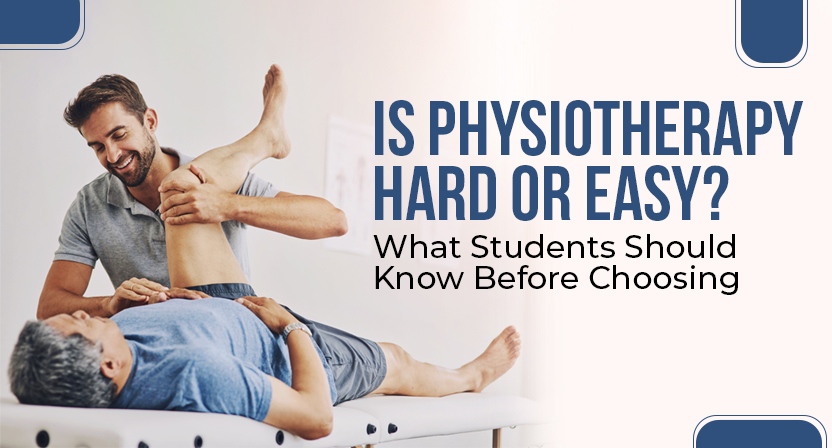
Physiotherapy involves a balanced academic and practical load. While theory builds the foundation, practical training develops real clinical skills. There is also a mix of mental effort and physical effort—students learn how the human body moves, heals, and responds to therapy, and then apply this knowledge through hands-on treatment.
Unlike courses that depend only on exams, BPT requires continuous learning through labs, clinical postings, and patient interaction. Students who stay consistent and engaged usually find the course structured and manageable rather than overwhelming.
The academic difficulty of the BPT course is moderate and becomes easier with time and clinical exposure. Core subjects in physiotherapy include Anatomy, Physiology, Biomechanics, Orthopaedics, and Neurology, all of which are closely connected to human movement and rehabilitation.
Many students find anatomy challenging in the first year, mainly because it is detailed and new. However, as students progress and begin clinical training, these subjects start making practical sense. Seeing how muscles, joints, and nerves work in real patients helps concepts become clearer and easier to retain.
Compared to Physics, Chemistry, and Biology in 11th and 12th, physiotherapy subjects are more application-oriented. Instead of memorising for exams, students learn by observing, practising, and repeating—making the academic load more logical and less stressful over time.
Physiotherapy does involve physical activity, but it is not excessively demanding or exhausting. The course includes hands-on treatments, assisted exercises, and supervised patient handling, especially during clinical postings.
Students may spend longer hours standing in hospitals or rehabilitation centres, which requires basic physical stamina. However, this is healthy physical effort, not strain. Over time, students naturally build strength, posture awareness, and endurance as part of their training.
Importantly, physiotherapy focuses on correct body mechanics and safe techniques, protecting both the patient and the therapist. With proper guidance and gradual exposure, most students adapt comfortably and even experience improved fitness as they progress through the course.
In physiotherapy, learning truly begins in clinical settings. At Little Flower Institutions, practical training is a core part of the BPT course, supported by hospital postings and structured clinical rotations that help students apply theory to real patient care.
Through patient interaction, observation, and supervised practice, students understand how anatomy, movement, and rehabilitation work in real-life conditions such as orthopaedic injuries and neurological recovery. This hands-on exposure reduces reliance on rote learning and eases academic pressure.
With experienced faculty mentorship and strong hospital tie-ups, students gain confidence in treatment techniques and patient handling. This guided, practice-focused approach makes physiotherapy more manageable and engaging, especially for students who learn best by doing.
(Physiotherapy often feels more manageable and enjoyable for students who naturally align with the course demands. The BPT course suits learners who:
For such students, physiotherapy becomes a skill-based, engaging healthcare career, not an academic burden.
Physiotherapy can feel challenging for students whose expectations don’t match the nature of the profession. It may be harder for those who:
Physiotherapy is not about shortcuts—it rewards commitment, curiosity, and continuous learning. Understanding this early helps students make a confident, informed career choice. makes it easy to see how the two pathways diverge, even though both contribute to the functioning of healthcare systems.
When students ask whether physiotherapy is hard or easy, the real answer lies in the type of difficulty, not which course is “better.” Each healthcare path challenges students in different ways.
The key difference is not difficulty, but where the effort goes—academic depth, clinical exposure, or physical involvement.
Many misconceptions make students anxious about choosing the BPT course. Here’s the reality:
Understanding these facts helps students make informed decisions without unnecessary fear or unrealistic expectations. roles involve less autonomy than Allied Health positions, they are vital to hospital operations and offer significant practical experience.
The learning experience in physiotherapy depends heavily on the quality of the institution. Well-structured physiotherapy colleges make the course more manageable by offering:
At institutions that prioritise guided learning and clinical exposure, physiotherapy becomes challenging but achievable, helping students grow confidently into skilled healthcare professionals.
Choosing where to study physiotherapy can shape how confident and capable you feel during the BPT course. At Little Flower Institutions, the focus is on making learning structured, supportive, and practical—so students understand why they are learning, not just what to study.
Students benefit from a supportive learning environment where faculty guide concepts step by step and encourage questions. Guided practical training and a strong emphasis on clinical exposure help students connect anatomy and theory with real patient care, reducing academic pressure over time.
The institution follows a student-first academic approach, offering mentoring and steady support throughout the physiotherapy program. Being located in Bangalore also adds value, with access to diverse healthcare settings that enhance practical learning and career readiness in physiotherapy.
Physiotherapy and nursing are different, not harder or easier. Physiotherapy focuses more on movement science, anatomy, and hands-on rehabilitation, while nursing involves broader clinical care and shift-based responsibilities.
Anatomy can feel challenging at first in the BPT course, but it becomes easier when students connect theory with clinical practice and real patient cases.
Yes. Average students can manage physiotherapy well with consistent study habits, practical involvement, and genuine interest in patient care and human movement.
Physiotherapy requires basic physical stamina, not heavy strength. Proper techniques, posture, and training make the work manageable, and fitness improves over time.
Like any healthcare course, physiotherapy has demanding phases, but practical learning and patient interaction often reduce exam-related stress compared to purely theory-based courses.
The comparison between Allied Health vs Paramedical in 2026 shows how these two fields offer different yet valuable opportunities. Allied Health Sciences provide advanced training, higher responsibility and stronger career pathways. Paramedical diplomas offer quick employability and foundational skills for technician roles.
Little Flower Institutions, with affiliations under RGUHS and the Paramedical Board of Karnataka, offer both pathways with structured curricula and clinical exposure. Students can choose the course that best matches their interests and long-term career plans.