Key Takeaways
Strong nursing skills improve career opportunities in hospitals, community healthcare, critical care, and international healthcare settings.
Many students believe that scoring good marks is the most important factor in becoming a successful nurse. While academic knowledge certainly matters, it is only one part of nursing education. In reality, the skills you develop during your GNM Nursing course have a much greater impact on your future career.
Modern healthcare is fast-paced, technology-driven, and highly collaborative. Nurses are expected to monitor patients, administer medications, assist doctors, educate families, respond to emergencies, and communicate effectively with multidisciplinary healthcare teams. Performing these responsibilities requires far more than theoretical knowledge.
This is why hospitals look for graduates who are confident, compassionate, technically skilled, and capable of making sound clinical decisions under pressure.
Students exploring GNM Nursing Admission 2026 in Bangalore often focus on eligibility, course duration, and career opportunities. However, understanding the skills needed for professional success is equally important because these abilities determine how effectively you perform once you enter the healthcare workforce.
Whether you plan to work in a general ward, intensive care unit, operation theatre, community health centre, or pursue higher education after GNM Nursing, developing the right skills will help you build a rewarding and long-lasting nursing career.
Academic examinations evaluate your understanding of nursing concepts, anatomy, physiology, pharmacology, and patient care principles. However, real hospitals present situations that cannot always be solved by textbook knowledge alone.
Imagine caring for a patient whose condition suddenly deteriorates. In such situations, nurses must observe symptoms, remain calm, communicate quickly with doctors, reassure family members, and follow emergency protocols simultaneously.
These situations require practical skills developed through clinical exposure rather than classroom learning alone.
Healthcare employers increasingly recruit graduates who demonstrate:
A student who consistently develops these skills throughout GNM Nursing often adapts to hospital environments much faster than someone who focuses only on examination scores.
For this reason, nursing education emphasizes practical learning alongside theoretical subjects.
Technical Skills Every GNM Nursing Student Should Develop
Technical skills form the foundation of professional nursing practice. These are the practical abilities that nurses use every day while caring for patients.
During GNM Nursing, students gradually develop these competencies through laboratory practice, hospital postings, clinical demonstrations, and supervised patient care.
Patient Assessment Skills
Patient assessment is one of the first and most important clinical skills taught during nursing education.
Every patient is different, and nurses must learn to observe both obvious and subtle changes in their condition. Accurate assessment allows doctors to make timely treatment decisions and helps prevent complications.
Students learn how to:
Developing strong assessment skills also improves confidence during hospital postings, where students begin interacting with real patients under supervision.
Vital Signs Monitoring
Monitoring vital signs is a routine responsibility that every nurse performs throughout their career.
Students are trained to accurately measure and interpret:
Although these procedures may seem simple initially, they provide critical information about a patient’s health status.
For example, changes in blood pressure or oxygen saturation may indicate complications that require immediate medical attention.
Learning to interpret these readings correctly is an essential part of professional nursing practice.
Medication Administration
Medication safety is one of the most important responsibilities of a nurse.
During GNM Nursing, students learn how to administer medications accurately while following established safety protocols.
Training includes:
Because medication errors can seriously affect patient safety, students practice these procedures repeatedly before performing them during clinical postings.
Hospitals highly value nurses who demonstrate accuracy, attention to detail, and accountability in medication administration.
Infection Prevention and Control
Healthcare-associated infections remain a major concern in hospitals worldwide.
Nurses play a central role in preventing infections by following strict hygiene and safety protocols.
Students develop practical skills in:
These skills protect patients, healthcare workers, and visitors while maintaining high standards of patient safety.
As healthcare continues evolving, infection prevention remains one of the most valuable clinical competencies for every nursing professional.
Wound Care and Basic Nursing Procedures
GNM students also develop skills related to everyday nursing procedures.
These include:
Although these tasks appear routine, they directly influence patient comfort, recovery, and overall treatment outcomes.
Developing confidence in basic nursing procedures creates a strong foundation for more advanced clinical responsibilities later in a nurse’s career.
Technical competence alone does not make an excellent nurse.
Communication is one of the most important professional skills developed during GNM Nursing.
Every day, nurses communicate with:
Good communication helps prevent misunderstandings, improves teamwork, and ensures that patients receive coordinated care.
For patients, nurses are often the healthcare professionals they interact with most frequently. Explaining procedures, answering questions, and offering emotional reassurance require empathy as well as clarity.
Students who actively develop communication skills during clinical postings usually become more confident professionals after graduation.
Critical Thinking and Clinical Decision-Making
Modern nursing involves much more than following instructions.
Nurses constantly evaluate patient conditions, prioritize care, recognize complications, and communicate important observations to doctors.
Critical thinking helps nurses:
Although doctors make final treatment decisions, nurses provide much of the clinical information that guides those decisions.
Developing critical thinking during GNM Nursing prepares students for increasingly complex healthcare environments.
Time Management: A Skill Every Nurse Must Master
Hospital environments are busy and unpredictable.
A nurse may need to administer medications, monitor patients, complete documentation, assist doctors, respond to emergencies, and comfort anxious family members—all within the same shift.
Without effective time management, important responsibilities can easily be delayed.
Students gradually learn how to:
Good time management not only improves efficiency but also reduces stress and helps nurses maintain a high standard of patient care.
Emotional Intelligence and Compassion: The Qualities That Define Great Nurses
While clinical knowledge and technical skills are essential, emotional intelligence is what transforms a competent nurse into an exceptional one.
Every day, nurses interact with patients who may be frightened, anxious, in pain, or emotionally overwhelmed. Families often rely on nurses for reassurance during some of the most difficult moments of their lives. In these situations, empathy, patience, and understanding become just as important as medical knowledge.
Emotional intelligence enables nurses to:
For example, explaining a medical procedure to a nervous patient requires more than technical knowledge. It requires compassion, patience, and the ability to make the patient feel safe and supported.
Students who develop emotional intelligence during GNM Nursing often find it easier to establish positive relationships with patients and colleagues, leading to better patient experiences and stronger professional confidence.
Teamwork: No Nurse Works Alone
Healthcare is built on teamwork.
Although nurses spend significant time with patients, they work alongside doctors, physiotherapists, pharmacists, laboratory professionals, radiology technologists, dietitians, and many other healthcare experts.
Every member of the healthcare team has a unique role, and effective collaboration ensures that patients receive safe, coordinated, and high-quality care.
During clinical postings, GNM students learn how to:
Strong teamwork improves patient safety, reduces medical errors, and creates a positive working environment.
Hospitals highly value nurses who work cooperatively, communicate clearly, and contribute positively to the healthcare team.
Adaptability: Preparing for a Changing Healthcare Environment
Healthcare is constantly evolving.
New diseases, updated treatment guidelines, advanced technologies, and changing patient needs require nurses to adapt throughout their careers.
A nurse may begin a shift in a general ward and suddenly find themselves assisting during an emergency. Patient priorities can change within minutes, requiring flexibility and quick thinking.
Adaptability helps nurses:
Students who remain open to learning throughout their GNM Nursing course often find it easier to succeed in rapidly changing healthcare environments.
Digital Skills Are Becoming Essential in Modern Nursing
Today’s hospitals are becoming increasingly digital.
Electronic Health Records (EHRs), digital medication systems, computerized laboratory reports, and patient monitoring software are now common in healthcare facilities.
As a result, nurses are expected to be comfortable using healthcare technology alongside traditional nursing skills.
Some important digital competencies include:
Although advanced technical expertise is not expected from every nursing graduate, basic digital literacy has become an important professional skill.
Students who embrace technology during their education will be better prepared for modern healthcare workplaces.
Professional Ethics and Accountability
Nursing is one of the most trusted professions in the world because it is built on ethical practice and professional responsibility.
Every nurse has a duty to protect patient dignity, maintain confidentiality, and provide care without discrimination.
During GNM Nursing, students learn about:
Ethical behaviour builds trust between patients and healthcare professionals and contributes to safer, more compassionate care.
Hospitals expect nurses to demonstrate honesty, integrity, and accountability in every aspect of their work.
Developing professional skills does not happen overnight. It is a gradual process that begins on the first day of nursing education.
Students who actively participate in practical learning opportunities often become more confident and competent professionals.
Here are some practical ways to strengthen essential nursing skills during the GNM course:
Participate Actively During Clinical Postings
Hospital postings provide opportunities to observe experienced nurses, interact with patients, and understand real clinical workflows.
Instead of simply completing assigned tasks, students should ask questions, observe procedures carefully, and learn from every patient encounter.
Practice Clinical Procedures Regularly
Repeated practice builds confidence.
Students should make full use of nursing laboratories to practice procedures such as:
The more students practice under supervision, the more comfortable they become during hospital postings.
Improve Communication Every Day
Communication improves with consistent practice.
Students should confidently interact with:
Listening carefully and expressing information clearly are skills that improve over time.
Stay Updated with Healthcare Developments
Healthcare is continuously advancing.
Reading nursing journals, attending workshops, participating in seminars, and following updates from professional organizations help students remain informed about modern nursing practices.
Continuous learning is one of the hallmarks of successful nursing professionals.
Learn from Feedback
Constructive feedback is an important part of nursing education.
Rather than viewing corrections as criticism, students should use them as opportunities to improve clinical skills and professional behaviour.
The willingness to learn from mistakes helps students become more competent healthcare professionals.
Many students unintentionally limit their professional growth by focusing only on academic performance.
Some of the most common mistakes include:
Neglecting Practical Training
Theory provides knowledge, but clinical practice builds confidence.
Students who avoid participating during hospital postings often struggle after graduation.
Poor Time Management
Balancing classes, assignments, clinical duties, and examinations can be challenging.
Developing a structured daily routine helps reduce stress and improves productivity.
Fear of Asking Questions
Many students hesitate to ask questions because they fear making mistakes.
In reality, asking questions demonstrates a willingness to learn and helps prevent errors during patient care.
Ignoring Soft Skills
Clinical competence alone is not enough.
Communication, teamwork, empathy, and professionalism significantly influence career success in nursing.
Avoiding Continuous Learning
Healthcare professionals must continue learning throughout their careers.
Students who develop curiosity and a habit of lifelong learning remain more adaptable and competitive in the healthcare industry.
At Little Flower Group of Institutions, nursing education focuses on developing skilled, compassionate, and confident healthcare professionals.
The GNM Nursing program combines academic excellence with extensive practical exposure, ensuring students graduate prepared for real hospital environments.
Students benefit from:
The institution follows the standards prescribed by the Indian Nursing Council (INC), the Karnataka Nursing Council (KNC), and the academic framework of the Rajiv Gandhi University of Health Sciences (RGUHS).
By emphasizing both technical competence and professional values, Little Flower Group of Institutions prepares students to build successful careers in hospitals, community healthcare, critical care, rehabilitation, and many other healthcare settings.
Success in GNM Nursing is determined by much more than examination scores. While academic knowledge forms the foundation, the skills students develop throughout their education shape their ability to provide safe, compassionate, and effective patient care.
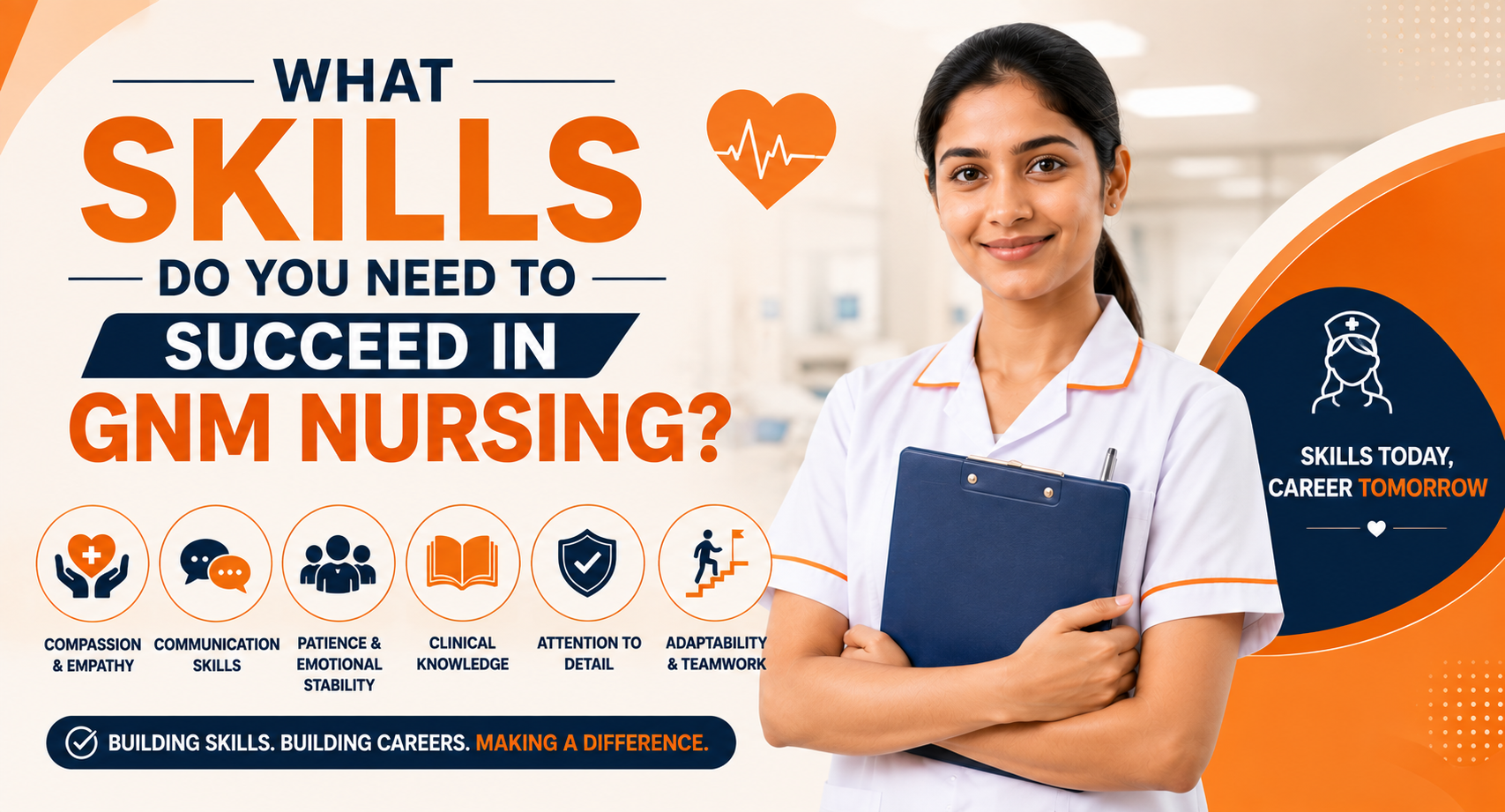
Technical competencies such as patient assessment, medication administration, infection control, and clinical procedures are essential. Equally important are communication, teamwork, emotional intelligence, adaptability, ethical practice, and a commitment to lifelong learning.
Students who actively participate in clinical training, embrace feedback, and continuously develop both technical and interpersonal skills are better prepared for the challenges of modern healthcare. These qualities not only improve employability but also help nurses build meaningful careers that positively impact the lives of countless patients.
Choosing a nursing institution that emphasizes practical learning, clinical exposure, and holistic professional development is one of the most important steps toward achieving long-term success in the nursing profession.
Students need strong clinical skills, communication abilities, patient assessment, medication administration, infection control knowledge, teamwork, empathy, and time management to succeed in GNM Nursing.
Communication helps nurses understand patient needs, coordinate with healthcare teams, educate patients and families, and improve overall patient safety.
Yes. GNM Nursing includes extensive practical training through nursing laboratories, hospital clinical postings, community health programs, and supervised patient care experiences.
Absolutely. Employers value nurses who demonstrate empathy, professionalism, teamwork, adaptability, and effective communication alongside strong clinical competence.
5. How can GNM Nursing students improve their clinical skills?
Students can strengthen their skills by actively participating in clinical postings, practicing nursing procedures regularly, seeking faculty guidance, learning from feedback, and staying updated with current healthcare practices.
6. Are digital skills important for modern nurses?
Yes. Modern hospitals increasingly use electronic health records, digital documentation systems, and healthcare software, making basic digital literacy an essential skill for today’s nursing professionals.