Key Takeaways
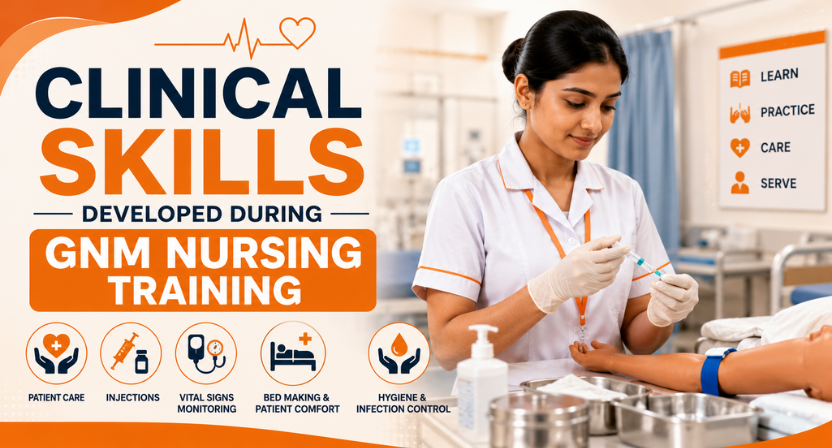
The clinical skills developed during GNM nursing training play a major role in preparing students for real patient care. Nursing is not limited to classroom learning. Students must also learn how to assess patients, perform procedures, communicate with healthcare teams, and respond to different clinical situations.
Many students applying for GNM nursing focus on eligibility and admissions. However, the practical learning experience is what truly prepares them for a nursing career. Students exploring GNM Nursing Admission 2026 in Bangalore often discover that clinical exposure is one of the most valuable parts of the course.
Understanding the clinical skills developed during GNM nursing training helps students know what to expect during practical sessions and hospital postings. These skills gradually improve through supervised practice and real-world patient care experiences.
Clinical competence is essential for every nurse. Patients depend on nurses for monitoring, support, and direct care. Therefore, nursing students must develop strong practical abilities before entering the workforce.
The clinical skills developed during GNM nursing training help students:
As a result, students become better prepared for future nursing roles.
Patient assessment is one of the first skills taught during nursing education. Students learn how to collect patient information, observe symptoms, and identify health concerns.
For example, nurses must recognize changes in a patient’s condition and report them promptly. Therefore, observation and assessment become important clinical responsibilities.
Monitoring vital signs is a fundamental nursing skill.
Students learn how to measure:
These measurements help healthcare teams evaluate a patient’s condition and monitor recovery.
Medication administration is one of the most important clinical skills in GNM nursing.
Students learn how to:
Because medication errors can affect patient safety, accuracy is extremely important.
Infection control protects both patients and healthcare workers.
Students learn:
In addition, students learn why infection prevention is essential in hospitals and community healthcare settings.
Wound management is another important practical skill.
Students learn how to clean wounds, change dressings, maintain sterile conditions, and monitor healing progress. Consequently, they develop confidence in providing basic wound care.
Communication is one of the most valuable skills learned during GNM training.
Nurses communicate with patients, family members, doctors, and colleagues every day. Therefore, effective communication improves patient safety and reduces misunderstandings.
Students reading about the duties of a GNM nurse often discover that communication skills are just as important as clinical procedures.
Accurate documentation is an essential nursing responsibility.
Students learn how to record:
Proper documentation supports continuity of care and legal accountability.
Healthcare emergencies require quick action.
Students learn basic emergency care techniques such as first aid, patient monitoring, emergency response support, and recognizing critical situations.
These experiences help students remain calm under pressure.
Nurses often educate patients about their treatment plans and health conditions.
Students learn how to explain:
As a result, patients become more involved in their own healthcare.
Modern healthcare depends on teamwork.
Students learn how to collaborate with doctors, therapists, technicians, and other healthcare professionals. They also learn professional ethics, confidentiality, and patient rights.
Therefore, teamwork becomes an important part of the clinical skills developed during GNM nursing training.
Most of the clinical skills developed during GNM nursing training are strengthened through repeated practice.
Laboratory training allows students to practice procedures before working with real patients. This environment helps students gain confidence while making mistakes in a safe setting.
Hospital postings provide direct patient-care experience. During these sessions, students observe experienced nurses and gradually perform procedures under supervision.
Many GNM nursing practical skills are refined through daily clinical exposure.
Community health programs expose students to preventive healthcare services. Students participate in awareness programs, vaccination drives, and health education activities.
The GNM nursing practical exam evaluates whether students can perform procedures safely and correctly.
Unlike theory examinations, practical exams focus on skill performance, communication, patient safety, and professionalism.
Learning clinical skills can be challenging at first.
Students often experience:
However, these concerns usually decrease as students gain experience.
Students involved in practical training in healthcare courses often find that confidence improves significantly with practice and guidance.
Employers value nurses who can provide safe and effective patient care.
The clinical skills developed during GNM nursing training help graduates:
Students exploring career options after GNM nursing often discover that strong practical skills improve job opportunities and career growth.
Those interested in higher education can also explore Post BSc after GNM to expand their qualifications and career prospects.
The clinical skills developed during GNM nursing training form the foundation of a successful nursing career. Through laboratory sessions, hospital postings, community health programs, and practical examinations, students learn how to provide safe and compassionate patient care.
From patient assessment and medication administration to communication and emergency response, the clinical skills developed during GNM nursing training prepare students for real healthcare environments.
Although learning these skills takes time, regular practice and guidance help students become more confident and competent. Strong clinical competence remains one of the most valuable outcomes of the clinical skills developed during GNM nursing training.
Students learn patient assessment, vital signs monitoring, medication administration, infection control, wound care, communication, documentation, and emergency care skills.
GNM nursing practical skills are hands-on abilities learned through nursing laboratories, hospital postings, and supervised patient-care activities.
Clinical skills are essential because they help nurses provide safe, effective, and professional patient care.
Students participate in laboratory sessions, hospital postings, community health programs, and practical examinations to develop nursing competence.
Creating study schedules, preparing before clinical postingImportant skills include patient assessment, communication, medication administration, documentation, infection control, teamwork, and emergency care abilities.