Key Takeaways
Healthcare today is more complex, fast-paced, and technology-driven than ever before. While doctors and nurses are often the most visible part of the system, a large portion of patient care depends on professionals working behind the scenes.
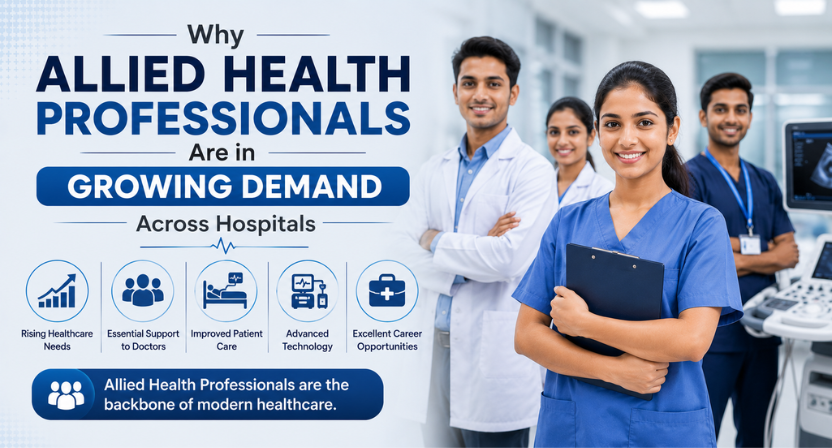
Allied health professionals form the backbone of this system. They are responsible for supporting diagnosis, operating medical equipment, assisting in treatment, and helping patients recover effectively.
The growing demand for allied health professionals across hospitals is not a trend — it is a result of structural changes in healthcare. Increasing patient numbers, rising chronic diseases, and the need for specialised care have made these roles indispensable.
For students looking for a healthcare career that is practical, skill-based, and offers strong growth, allied health is one of the best options today.
Allied health professionals are trained healthcare specialists who work alongside doctors and nurses to deliver complete patient care. They focus on specific areas such as diagnosis, rehabilitation, and technical support.
Unlike doctors, who primarily diagnose and prescribe treatment, allied health professionals are directly involved in executing that treatment. Their work often determines how accurate a diagnosis is and how effective a patient’s recovery will be.
For example, when a doctor suspects a fracture, it is the radiology technician who performs the scan. When a patient undergoes surgery, it is the physiotherapist who helps them regain mobility. When blood tests are required, lab technicians provide the results that guide treatment decisions. This makes allied health professionals not just supportive staff, but critical contributors to patient outcomes.
Modern hospitals operate as integrated systems where multiple departments work together. Each department depends on specialised professionals to function efficiently.
Doctors rely on accurate reports, imaging, and patient monitoring to make decisions. Allied health professionals provide this support through their expertise and technical skills.
For instance, without lab reports, a doctor cannot confirm many conditions. Without physiotherapy, patients may not recover properly after surgery. Without trained technicians, advanced medical equipment cannot be used effectively.
This dependence means hospitals cannot function without allied health professionals. As healthcare becomes more specialised, this dependency continues to grow.
1. Increasing Patient Load
One of the biggest reasons for rising demand is the increase in patient volume. Hospitals today see significantly more patients due to population growth and better access to healthcare services.
More patients mean:
This creates a continuous need for skilled professionals who can manage these processes efficiently. Allied health professionals help hospitals handle this workload without compromising patient care quality.
2. Rise in Lifestyle Diseases
Lifestyle-related conditions such as diabetes, obesity, hypertension, and musculoskeletal disorders are becoming increasingly common.
These conditions require long-term management rather than one-time treatment. Allied health professionals play a major role in this process by:
For example, a patient with chronic back pain may require months of physiotherapy. This long-term involvement increases demand for skilled professionals.
3. Shift Toward Specialised Healthcare
Healthcare is no longer generalised. Each department requires professionals with specific expertise.
Hospitals now have dedicated departments for:
Each department needs trained allied health professionals who understand specific procedures and equipment. This shift toward specialisation has significantly increased demand.
4. Growing Importance of Rehabilitation and Recovery
Earlier, healthcare focused mainly on treating diseases. Today, recovery and rehabilitation are equally important.
Patients recovering from surgeries, injuries, or neurological conditions require structured rehabilitation programs. Allied health professionals design and implement these programs to ensure proper recovery.
Without rehabilitation, patients may experience long-term complications or incomplete recovery. This has made allied health roles essential in every hospital.
5. Technological Advancements in Healthcare
Modern healthcare relies heavily on advanced technology.
Equipment such as MRI scanners, CT machines, ultrasound devices, and digital monitoring systems require trained professionals to operate them.
Allied health professionals are trained to:
As technology continues to evolve, the need for skilled professionals who can handle it is increasing.
6. Ageing Population and Long-Term Care Needs
With increasing life expectancy, more people require long-term healthcare support.
Elderly patients often face mobility issues, chronic conditions, and recovery challenges. Allied health professionals provide continuous care through rehabilitation, monitoring, and support services.
This shift toward long-term care has created a steady demand for allied health roles across hospitals.
Physiotherapists
Physiotherapists focus on restoring movement and reducing pain. They work with patients recovering from surgeries, injuries, or neurological conditions.
Their role is essential in rehabilitation and long-term recovery.
Medical Laboratory Technicians
Lab technicians perform diagnostic tests that help doctors identify diseases.
Their work includes:
Accurate lab results are critical for correct diagnosis and treatment.
Radiology and Imaging Technicians
These professionals operate imaging equipment like X-rays, CT scans, and MRIs.
They ensure accurate imaging, which is essential for diagnosing injuries and internal conditions.
Operation Theatre Technicians
They assist during surgeries by preparing equipment, maintaining sterile environments, and supporting surgeons.
Their role is crucial for smooth surgical procedures.
Dialysis Technicians
Dialysis technicians manage patients with kidney disorders and operate dialysis machines.
They ensure safe and effective treatment for patients with renal conditions.
Emergency and Critical Care Technicians
These professionals handle emergency situations and assist in life-saving procedures.
They work in high-pressure environments where quick decision-making is essential.
Skills Required for Allied Health Professionals
As highlighted in your reference , skills are more important than theory in healthcare roles.
Clinical Skills
Understanding patient conditions and performing procedures accurately.
Communication Skills
Explaining processes to patients and coordinating with healthcare teams.
Technical Skills
Handling medical equipment and maintaining records.
Professional Skills
Critical thinking, adaptability, and time management.
Hospitals prefer candidates who are confident, skilled, and ready to work in real clinical environments.
Career Growth and Salary Opportunities
Allied health careers offer strong growth opportunities.
Freshers can quickly enter the workforce, and with experience, they can move into specialised or senior roles.
Salary increases with:
There are also opportunities to work in private hospitals, government sectors, and international healthcare systems..
The future of allied health is closely linked to healthcare innovation.
Emerging trends include:
Professionals who adapt to these trends will have better career prospects.
Challenges in Allied Health Careers
While the field offers strong growth, it also comes with challenges.
Work can be physically demanding, especially in roles like physiotherapy or emergency care. There may be long working hours and high responsibility.
However, these challenges are balanced by job stability, career growth, and the satisfaction of helping patients.
How to Build a Successful Career in Allied Health
Success in allied health depends on practical experience and skill development.
Students should focus on:
Real-world experience is what makes a professional job-ready.
Little Flower Institutions focus on building skilled healthcare professionals through practical learning.
Students receive:
This approach ensures students are prepared for real-world healthcare environments.
Allied health professionals are essential to modern hospitals. Their role in diagnosis, treatment, and recovery makes them a key part of the healthcare system.
With increasing demand, diverse career options, and strong future growth, allied health is one of the best career choices for students today.
They are trained healthcare workers who support doctors in diagnosis, treatment, and patient care.
Due to rising patient numbers, lifestyle diseases, and advanced medical technology.
Courses include physiotherapy, lab technology, radiology, dialysis technology, and more.
Yes, it offers job stability, career growth, and strong demand.
Yes, with proper qualifications and certifications.
Clinical, communication, technical, and problem-solving skills are essential